
What Is Masking in Mental Health?
(And Why We Do It)
Feeling one way but presenting another
Masking in mental health refers to when you feel one way inside but present another way outwardly.
It might look like saying you’re fine when you’re not, trying to appear calm while overwhelmed, or agreeing to things you don’t really want to.
Masking isn’t about dishonesty—it’s about adapting to immediate circumstances.
For many, this happens so quickly and with little awareness. It blends so seamlessly into their daily social routines.

How masking in mental health shows up in everyday life
Masking doesn’t always stand out; in fact, the entire goal is to go unnoticed.
It can look like:
- adjusting your tone or reactions depending on who you’re with
- keeping your thoughts to yourself
- staying agreeable to avoid tension
- appearing steady while your body feels anything but
These small adjustments may seem minor, but without intention, they can become automatic over time and start influencing how you react to others.
Why Do People Mask Their Feelings?
Social situations and expectations
Unspoken expectations often dictate behaviour, especially in work, family, or social groups.
Easygoing, composed, agreeable behaviour is often rewarded.
Masking can help meet expectations without attracting attention.
Masking in mental health helps avoid conflict or discomfort
If you’ve learned that expressing how you feel leads to tension, disagreement, or escalation, it makes sense to avoid it.
Keeping our outward presentation tightly controlled often feels safer than being ourselves and risking unpredictable reactions.
Masking when we feel unsure or unsafe
Masking is often used in situations that feel uncertain or uncomfortable. It helps create a sense of safety and aids in maintaining stability in our environment.
If you want to understand that more, you can read about it here:
Understanding Your Nervous System → https://lahcounselling.ca/2026/02/03/understanding-your-nervous-system/
Signs You Might Be Masking Your Feelings
1. You say “I’m fine” when you are not.
You might observe that you respond automatically without even stopping to consider how you are really doing.
Maybe you agree to things you know you don’t want to do.
2. Relief when you’re alone
A noticeable shift when you’re alone is another sign.
When you are alone, you may finally relax, no longer needing to keep things together.
3. Emotional spillover
Masking holds—until it abruptly collapses.
You might notice strong reactions, like irritability or frustration, that are larger than the situation.
4. Physical and mental exhaustion
Masking takes effort.
Feeling drained after socializing, needing more recovery time, or feeling worn out from “holding it together” are common signs.
5. Disconnection from yourself
The longer you deny to others how you feel, the harder it can become to tell what you’re actually feeling.
You may feel unsure of your needs, disconnected from what you genuinely feel, or just out of sync.
If you’re interested in learning more about feelings and emotions, check out my post on Understanding Emotions.

The Hidden Cost of Masking Your Feelings
Your needs go unmet
Emotions carry information about what you need.
When emotions are consistently set aside, needs go unexpressed and unmet, continuing patterns.
Over time, patterns continue simply because nothing interrupts them.
Resentment and emotional build-up
When you regularly go along with things that don’t sit well, frustration can build.
Maybe you start snapping at others, or maybe you’re stuck in a loop thinking about how unfair things are.
Over time, tension builds, and distance grows in our relationships.
Disconnection from yourself
When we deny our experience long enough, we can lose trust in ourselves, our bodies, and our responses.
You may find your decisions shaped more by others’ expectations than your own needs.

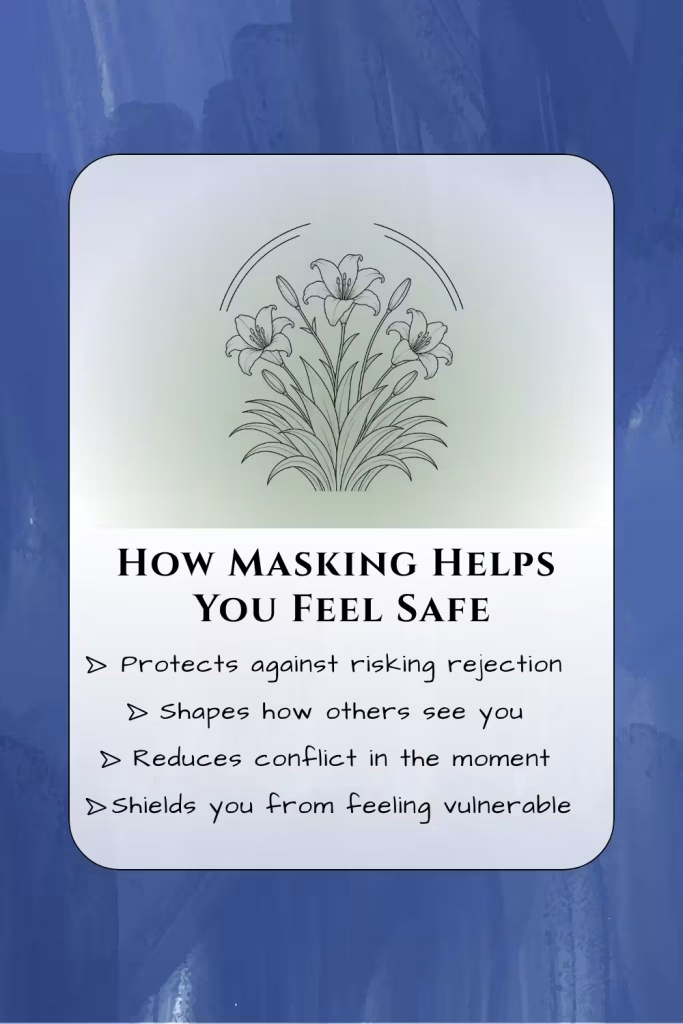
How Masking Can Help You Feel Safe
Maintaining stability in certain environments
Masking isn’t inherently a problem.
In specific settings, like work or unfamiliar environments, masking keeps interactions manageable and predictable.
Buying time to assess a situation
Masking in mental health provides time to assess a situation.
Masking creates space to observe and decide what feels safe, making reactions less immediate and more thoughtful.
Protection in vulnerable moments
When emotions feel overwhelming, or we aren’t certain how others will respond, masking can offer protection in the present moment. Masking can shield us from real or perceived harm in moments of uncertainty.
How to Use Masking More Intentionally
Notice when you’re masking
Awareness is the first step.
Catching it in real time — or even afterward — helps you start to see patterns.
Understand what it’s doing for you
Masking usually serves a purpose.
It might be reducing conflict, managing how you’re perceived, or helping you feel more stable.
Understanding why masking happens helps you make more informed choices about using it.
Intentionally choose when and where to mask
Not every situation requires the same level of openness.
As you build awareness, notice where masking is useful and where it’s not required.
Protect time where you don’t mask
This might be certain relationships or small moments where you can be more direct.
It doesn’t have to be all-or-nothing.
Take time to reset afterward
Masking drains energy.
Recognizing that — and allowing time to recover — can reduce the overall strain.

How You Can Stop Masking Your Feelings (Gently and Gradually)
Begin in low-risk settings
Find spaces and relationships that feel safer or more predictable, and starting with small shifts is often more sustainable than big ones.
Prepare simple, honest responses
Dropping the mask doesn’t mean you start sharing everything you think and feel. That would be overwhelming for both you and others.
But being honest doesn’t mean sharing everything in every situation. It is important to identify some short, honest responses. This can make it easier to connect with others without oversharing.
Build tolerance for discomfort
Some discomfort is expected when changing patterns.
It doesn’t mean something is wrong — it often means something is new.
Protect your energy
Not every situation requires full openness.
Masking can still be useful — the goal is flexibility, not elimination.
Let it be gradual
These patterns develop over time, and they shift over time.
Uneven progress is expected.

Closing
Masking in mental health is not something to simply eliminate.
It’s something to understand.
As awareness grows, masking becomes intentional, not automatic.
If you are interested in learning more, and are a resident of Ontario, Quebec, or Newfoundland, feel free to book your free 15-minute consultation to see if therapy can support you in attaining your goals.
Leave a Reply